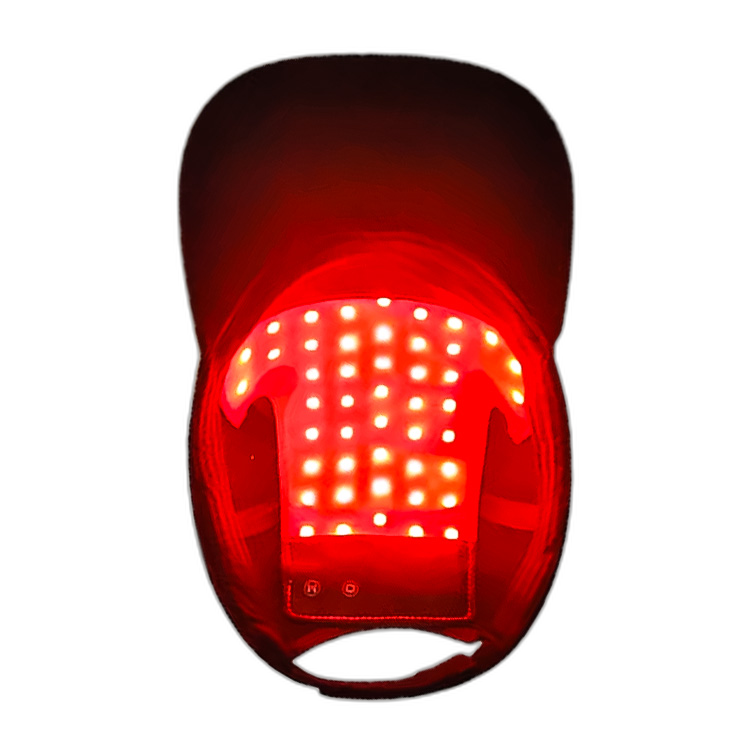
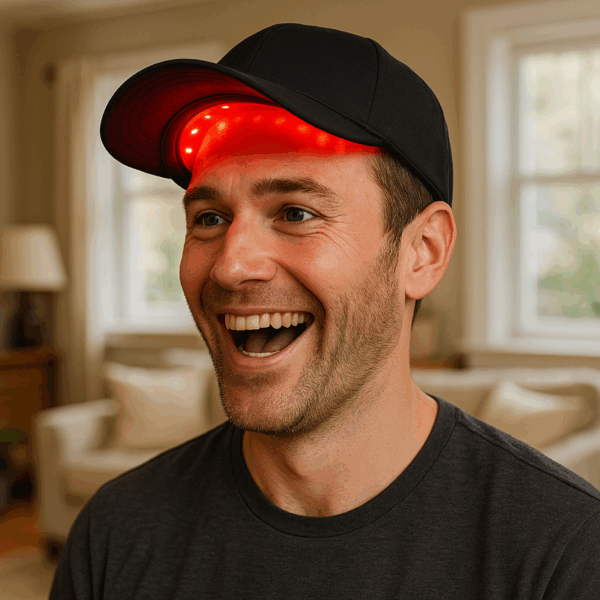
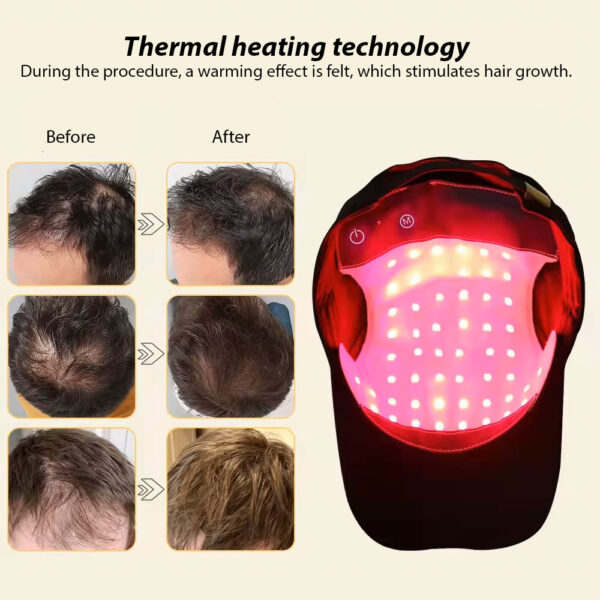
Photon Therapy Cap + GrowEasy
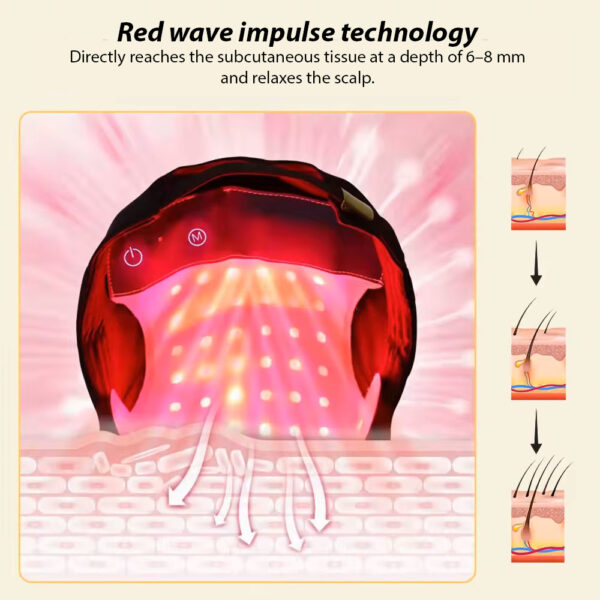
Red Light Therapy (RLT) stimulates mitochondria and ATP production, improving scalp microcirculation, reducing inflammatory processes, and allowing hair follicles to receive more oxygen and nutrients. As a result, RLT helps promote new hair growth, reduce hair loss, harmonize scalp condition, and improve overall hair quality (density, thickness, and structure).
This product is integrated with the GrowEasy biopattern program, designed to support hair regeneration processes on a subtle informational–energetic level.
Detailed explanation: how the GrowEasy protocol works and what it specifically includes can be found here: GrowEasy program description.
In stock
-
Greitas pristatymas 1–3 darbo dienos po apmokėjimo
-
14 d. grąžinimas Be klausimų, visas pinigų grąžinimas
-
Saugus mokėjimas Stripe · SSL · 3D Secure
Red Light Therapy (RLT), also known as photobiomodulation or low-level laser/light therapy (LLLT), uses light with a wavelength of 470–680 nm that penetrates the scalp and stimulates cellular mitochondria, boosting ATP (cellular energy) production. This is one of the most extensively researched areas of light therapy in the context of hair health.
What the scientific literature shows about this technology (RLT/LLLT in general, not about this specific product):
- Several meta-analyses and systematic reviews (see references below) indicate that regular LLLT use is associated with increased hair density and thickness in people with androgenetic alopecia.
- Several randomized, double-blind, sham-device-controlled clinical trials (16–24 weeks in duration, conducted in both men and women) show statistically significant differences between real-device and placebo groups.
- The US Food and Drug Administration (FDA) has granted clearance (510(k)) to more than 30 specific, separately clinically tested home-use LLLT device models for the treatment of androgenetic alopecia.
Important: This Biomind device emits light in a similar wavelength range (470–680 nm) to the devices used in the studies referenced above. However, this specific product has not been separately clinically tested and does not carry its own medical certification or FDA/CE clearance for the treatment of alopecia. The information above summarizes the general scientific literature on RLT/LLLT technology as a whole – it is not a claim about the proven effect of this specific device.
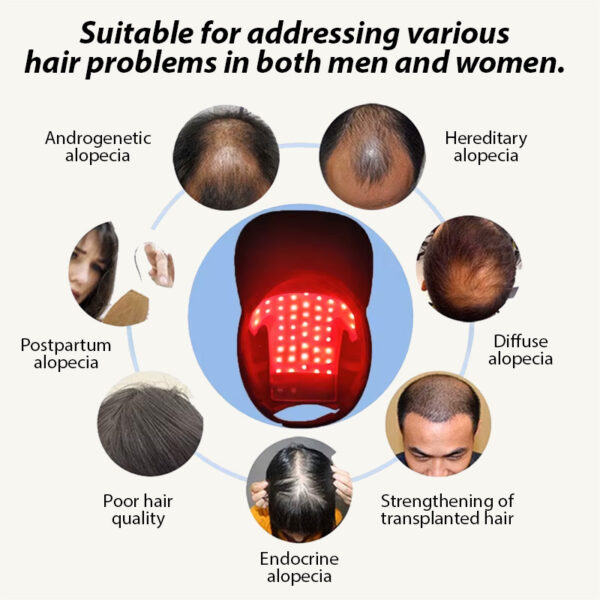
• Strengthens transplanted hair:
RLT may contribute to the recovery process of transplanted follicles and support healthy new hair growth – many hair transplant clinics recommend light therapy as a supportive part of post-procedure care.
• Balances the scalp:
Red light effectively reduces inflammation, flaking, and irritation of the scalp. This creates a healthier environment for natural hair growth.
• Improves overall hair quality:
By stimulating collagen production, this therapy enhances hair structure – making it stronger, thicker, and healthier.
References (scientific studies on RLT/LLLT and hair growth – not about this specific product):
- “Efficacy and Safety of a Low-Level Light Therapy for Androgenetic Alopecia: A 24-Week, Randomized, Double-Blind, Self-Comparison, Sham Device-Controlled Trial” — PMID: 29957664
- “Comparative effectiveness of low-level laser therapy for adult androgenic alopecia: a systematic review and meta-analysis of randomized controlled trials” — PMID: 30706177
- “Low-level light therapy for androgenetic alopecia: a 24-week, randomized, double-blind, sham device-controlled multicenter trial” — PMID: 23551662
- “The growth of human scalp hair mediated by visible red light laser and LED sources in males” — PMID: 24078483
- “The growth of human scalp hair in females using visible red light laser and LED sources” — PMCID: PMC4265291
- “Meta-analysis of photobiomodulation for the treatment of androgenetic alopecia” — PMID: 31746251
- “Photobiomodulation Therapy With Different Wavebands for Hair Loss: A Systematic Review and Meta-Analysis” — PMID: 35510860
This is not just another cap with red LEDs like the ones you see all over the internet. The Biomind Photon Therapy Cap is an advanced device with a pre-programmed GrowEasy biopattern module. This unique radionics-based program sends special energetic commands designed to stimulate the body’s natural hair regeneration processes.
Hair growth happens in three phases:
• Anagen phase – the active growth phase that lasts from 2 to 6 years. During this time, hair follicles are most active and produce new hairs rapidly.
• Catagen phase – the transition stage lasting 2–3 weeks, where hair growth stops and the follicle starts to shrink.
• Telogen phase – the resting phase, which lasts 3–4 months. During this time, the hair rests before naturally falling out and the cycle begins again.
The red light emitted by the Biomind cap (470–680 nm) is especially effective during the anagen phase, when follicles are most responsive to light and biopattern signals. That’s why this technology may support hair regeneration, improve scalp condition, and help maintain overall energetic balance.
The device is easy to use, comfortable, and designed for those exploring the connection between energy fields and physical health. It’s a great choice for people seeking holistic, advanced, and experimental solutions for hair wellness.
To better understand how the product works, we recommend attending the Radionics Seminar.
- Session duration: 15–20 minutes, 3 times per week, for 12–24 weeks to achieve optimal results.
- Application: Suitable for various types of hair thinning or for those looking to strengthen their hair.
- Safety: Non-invasive, suitable for all scalp types.
Important: The Biomind Photon Cap is not a medical device and is not intended for diagnosis, treatment, or prevention of diseases. It is an experimental tool designed for energy field enthusiasts who want to explore the effects of red light on hair condition. For any health concerns, please consult a qualified medical professional.

What you should know, before others do
Weekly insights. One essay. One practice. No noise.