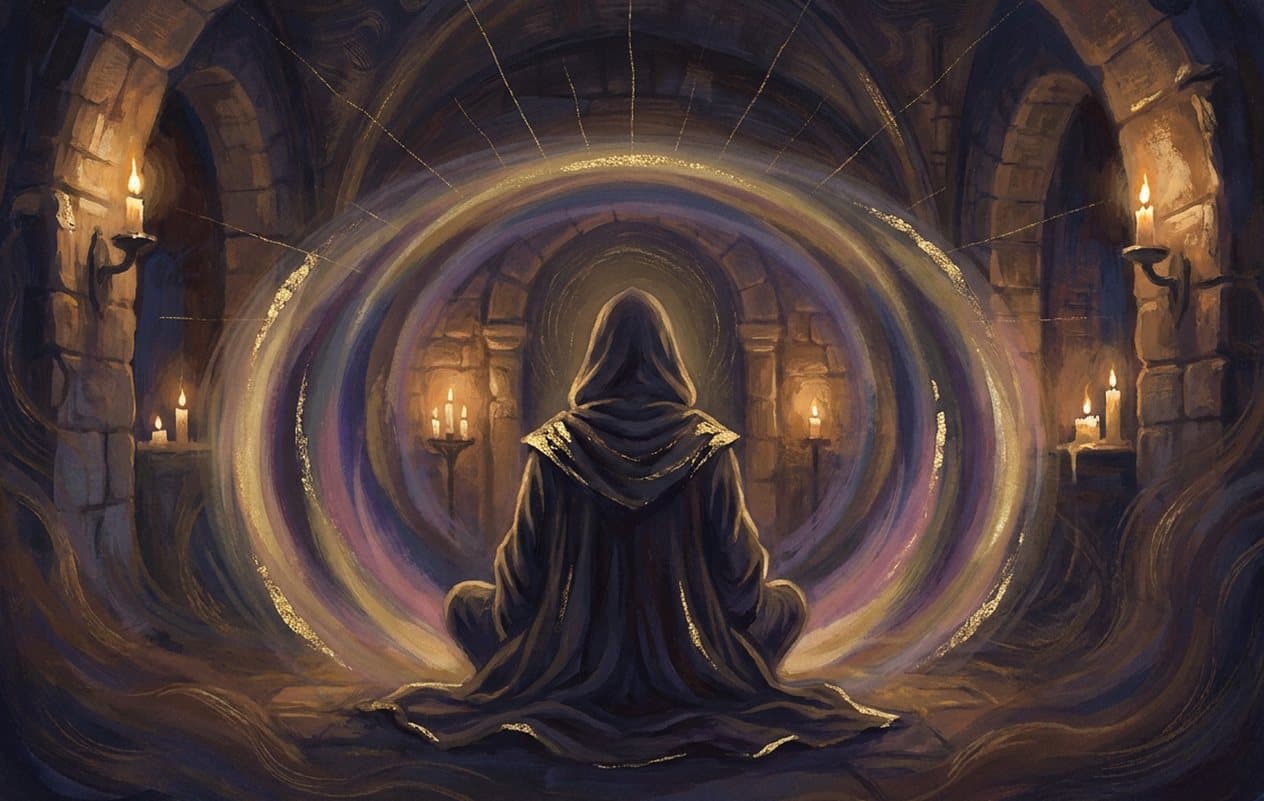
The aura (Greek and Latin aura, “breeze”) is, in the esoteric traditions, a field of light and energy surrounding every living being, in which a person's thoughts, feelings and spiritual state are reflected. Sacred art painted it as a halo and aureole, yoga as five subtle sheaths, and modern schools read it in layers and colours.
Key facts
The word “aura” comes from Greek and Latin and means “breeze, breath”.
In sacred art the aura is shown as a nimbus around the head and a mandorla around the whole body; Gandharan art depicted the Buddha with a halo in the first centuries CE.
The Taittiriya Upanishad describes five sheaths (kośa) that later became the basis of the layered aura model.
The Theosophists A. Besant and C. W. Leadbeater described the colours of thoughts and feelings in the aura in Thought-Forms (1901).
Kirlian photography was discovered in 1939 in Krasnodar by Semyon Kirlian, who later developed it with his wife Valentina.
Barbara Brennan described seven layers of the aura, linked to the chakras, in Hands of Light (1987).
Contents
What is an aura?
The word "aura" comes from the Greek and Latin aura, "breeze, breath". In the esoteric traditions, the aura is a field of light and energy that surrounds every living being. It is described as a coloured, shifting glow around the body in which, it is believed, a person's thoughts, feelings, state of health and spiritual maturity are reflected. Clairvoyants say they see the aura with their eyes; others sense it with their hands, as warmth, or as a mood when someone comes near.
Many schools treat the aura not as a separate "cloud" but as part of the subtle body. The physical body is the densest layer, and around it, like concentric shells, lie ever finer energy bodies. They are fed by the life force that India calls prana, China calls qi, and Western esotericism simply calls vital energy.
Today the aura is talked about on three levels. First, the radiance of saints and the subtle bodies of the ancient traditions. Second, the esoteric teachers of the nineteenth and twentieth centuries, who described the aura in layers and colours. Third, modern practice: aura reading, aura cleansing and aura photography.
The aura in ancient traditions and art
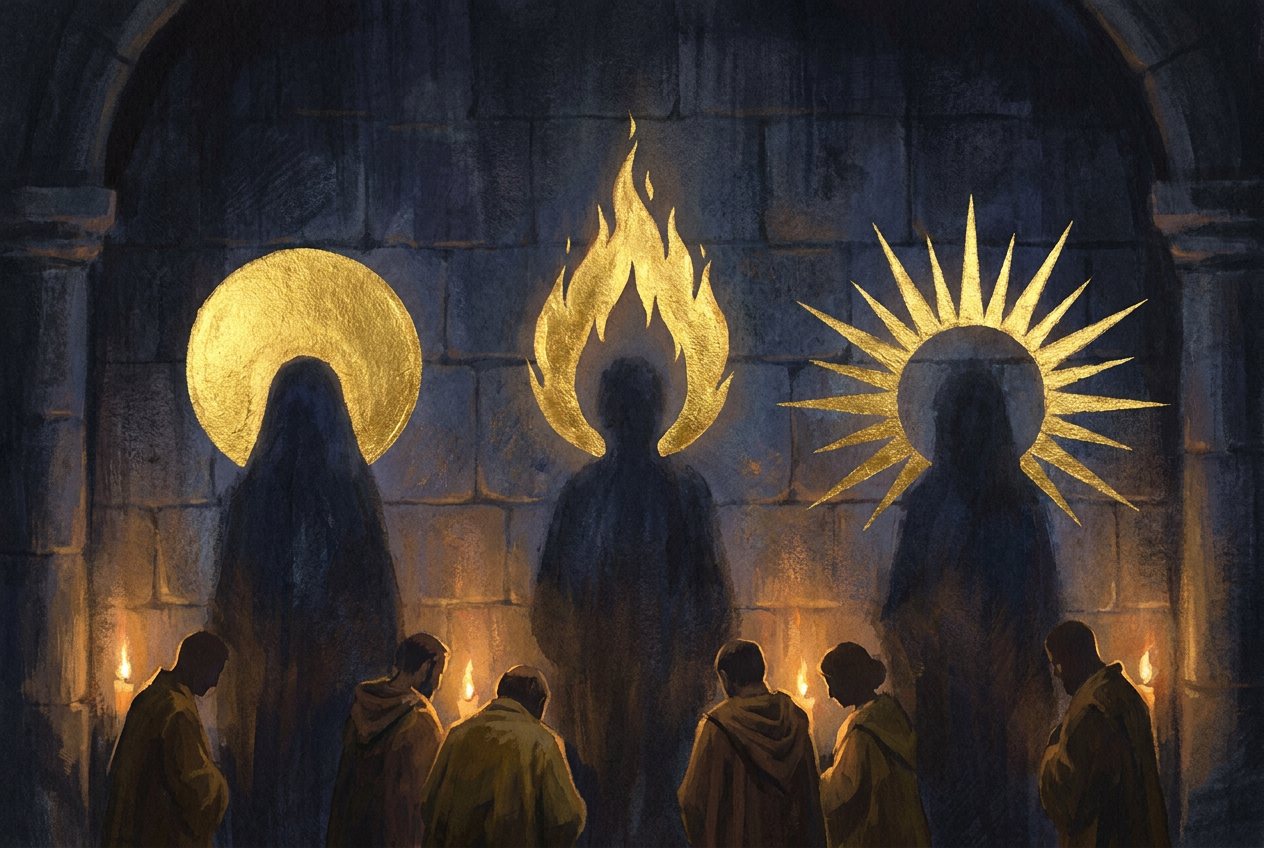
Light around a holy person is one of the oldest symbols in religious art. Before it was called an "aura", it was a nimbus, a halo or a mandorla, and almost every great tradition painted it in its own way.
Nimbus, mandorla and crown of rays: different traditions painted the same radiance of holiness in their own way.
Tradition
How it is shown
What it means
Ancient art
A crown of rays around the heads of gods and rulers
A sign of solar deities and divine power
Christianity
A nimbus around the head, a mandorla (an almond-shaped radiance) around the whole body
Holiness and the glory of God; the mandorla is usually reserved for Christ and Mary
Buddhism
A round radiance behind the head and body, sometimes in the form of flames
The light of awakening; Gandharan art showed the Buddha with a halo in the first centuries CE
Hinduism
Prabhamandala, a circle of light around a deity
The radiation of divine energy
Islamic miniatures
A flaming aureole around the heads of prophets
A sign of prophecy and spiritual light
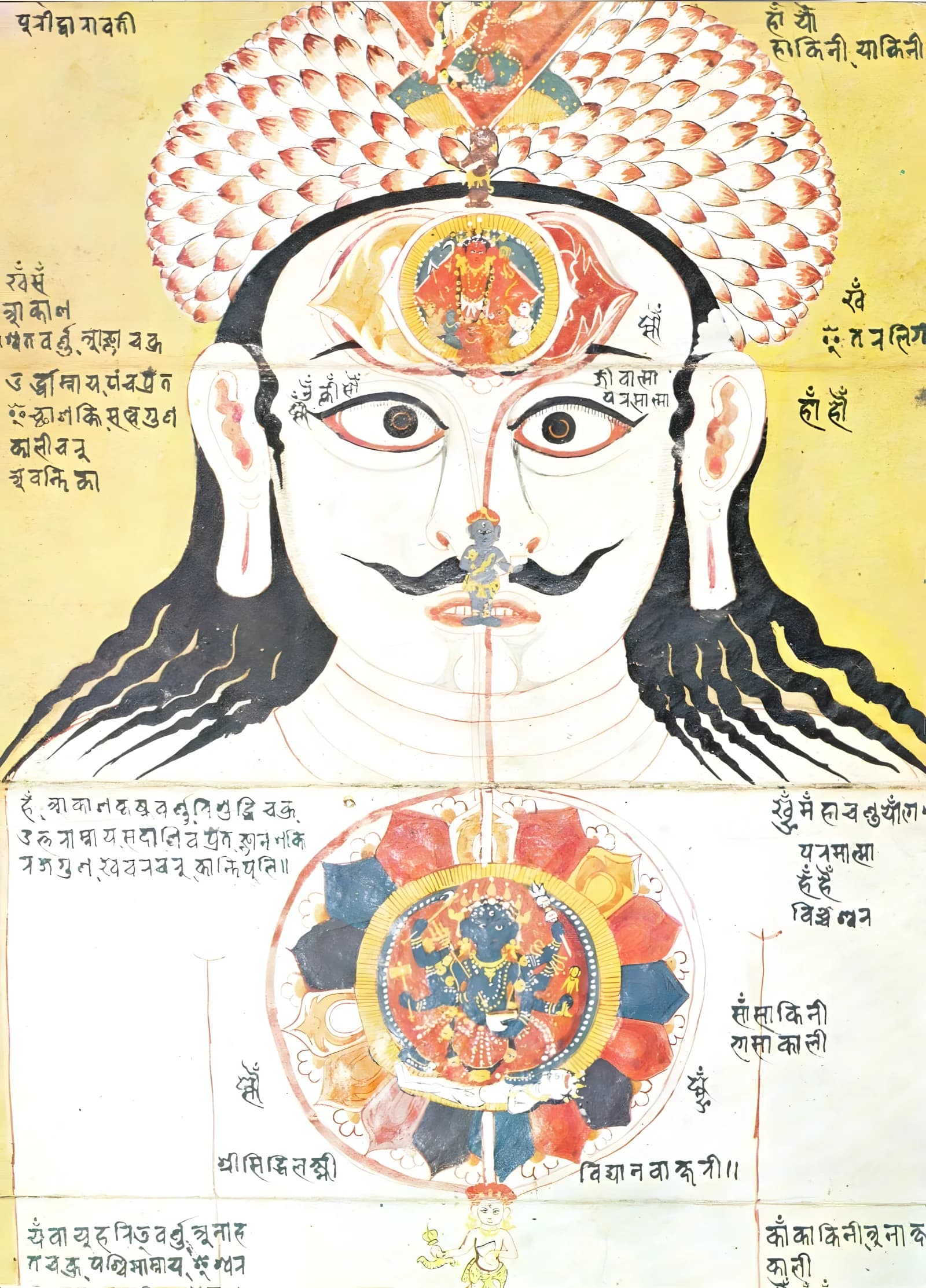
The yoga tradition describes the aura through five sheaths (kośa), set out in the Taittiriya Upanishad: the food (physical) body, the vital-energy body, the mind body, the wisdom body and the bliss body. Each finer sheath envelops the denser one, and at the centre of them all lies the true Self. This model later became the basis of the layered aura in Western esotericism.
What esoteric teachers taught about the aura
The modern idea of the aura was shaped in the nineteenth and twentieth centuries by a handful of researchers and teachers. Each added a piece: some observed the glow, others described it in colours, still others tried to capture it with instruments.
Karl von Reichenbach: the odic force
In the 1840s the German chemist described an "odic" force that sensitive people saw in the dark as light streaming from magnets, crystals and human fingers.
His work was one of the first attempts to describe the aura systematically.
The Theosophists: thought-forms and colours
Annie Besant and Charles W. Leadbeater, in Thought-Forms (1901), described how thoughts and feelings take on colours and shapes in the aura.
Leadbeater's Man Visible and Invisible (1902) offered coloured plates of the auras of different kinds of people.
Walter J. Kilner: aura screens
The London physician described in The Human Atmosphere (1911) how, through glass screens stained with dicyanin dye, he saw a haze extending around the body.
His "Kilner screens" were later made and sold to anyone who wanted to see the aura for themselves.
Semyon and Valentina Kirlian: photographs of the glow
In 1939 in Krasnodar, Semyon Kirlian noticed that objects and fingers in a high-voltage field left glowing coronas on a photographic plate.
Kirlian photography became one of the best-known symbols of the aura in twentieth-century esotericism.
Barbara Brennan: seven layers of the aura
In Hands of Light (1987) she described seven layers of the energy field, each linked to one of the seven chakras.
Her model is today one of the most widely used in energy-healing schools.
The yoga tradition: prana and the nadis
Hatha yoga texts describe thousands of energy channels (nāḍī) through which prana flows.
According to the yogis, when prana flows freely a person's radiance is bright and wide; when it is blocked, it is dull and narrow.
From the tradition
The story goes that in 1939 an electrician named Semyon Kirlian, repairing a medical device at a hospital in Krasnodar, saw tiny sparks between an electrode and a patient's skin. He placed a photographic plate in the field and, on developing it, found a glowing corona around the fingers. With his wife Valentina he spent decades photographing leaves, hands and seeds, and their pictures of glowing outlines travelled the world as "aura photographs".
The seven layers of the aura
The most popular modern model of the aura, developed by Barbara Brennan and other energy-healing schools, divides it into seven layers. Each is linked to one of the seven chakras and to one area of human life. The layers run outwards from the body: the further out, the finer.
Layer
Linked chakra
What it reflects
1. Etheric body
Root
The physical body, vitality, state of health; closest to the skin, a few centimetres wide
2. Emotional body
Sacral
Feelings and moods; the colours change fastest here
3. Mental body
Solar plexus
Thoughts, ideas, intellect and will
4. Astral body
Heart
Love, relationships, bonds with others; the bridge between the physical and the spiritual
5. Etheric template
Throat
The "blueprint" of the physical body, truth and self-expression
6. Celestial body
Third eye
Intuition, spiritual love, visions
7. Ketheric (causal) body
Crown
Connection with the divine, the soul's experience across lifetimes
Different schools name the layers slightly differently, and the Theosophists spoke of etheric, astral, mental and causal bodies. But all agree on one thing: the aura is not fixed. It breathes, expands and contracts together with a person's state.
Aura colours and what they mean
Aura colours are the most popular topic for anyone interested in the aura. In modern esotericism each colour has its own meaning: bright, clear shades are read as strengths, dark and muddy ones as stagnant energy. These are the meanings aura readers mention most often.
Colour
Bright, clear shade
Dark or muddy shade
Red
Vital strength, passion, courage, connection with the earth
Anger, anxiety, exhaustion
Orange
Creativity, joy, sexuality, a thirst for adventure
Addictive patterns, emotional restlessness
Yellow
Intellect, optimism, curiosity, new ideas
Perfectionism, too much control
Green
Healing energy, growth, love of nature, compassion
Jealousy, insecurity
Blue
Calm, truth, communication, loyalty
Fear of speaking the truth, sadness
Indigo
Intuition, deep sensitivity, inner sight
Withdrawal, loneliness
Violet
Spirituality, visions, connection with the higher Self
Living in dreams, losing touch with reality
White
Purity, protection, spiritual awakening
Rarely muddy; sometimes shows the fragility of a new beginning
Gold
Wisdom, divine protection, the energy of a teacher
Pride, when the light is used for oneself
Pink
Tenderness, unconditional love, care
Naivety, forgetting oneself
Grey, brown, black
Brown can show groundedness and hard work
Stagnant energy, fatigue, an old hurt, a shield against the world
Aura readers stress that an aura is almost never a single colour. Usually there is one main "personality" colour that stays similar for a long time, and several fast-changing ones that show the mood or thoughts of the day.
How to see your own aura
Many teachers say anyone can see the aura; the eyes just need training. Most people start with the etheric layer, a narrow, pale, sometimes bluish band right next to the body. Here is the classic practice:
Background and light. Stand, or hold your hand, in front of a white or pale grey wall. The light should be soft and indirect, without strong shadows.
Relax. Take a few deep breaths in and out. Tense eyes see the aura less easily, practitioners say.
Soft gaze. Look not at your hand but slightly beyond its outline, as if through it. Do not blink too often, but do not strain either.
The first glow. After 30 to 60 seconds many people notice a pale, transparent band around the fingers. This, according to teachers, is the etheric body.
Colours. With a few minutes of practice each day, colours begin to appear beyond the pale band. It is easiest to practise with a friend standing in front of a light wall.
Some people do not see the aura but feel it. Rub your palms together, then slowly draw them apart and bring them close again. Many feel warmth, tingling or something like an elastic ball between the palms. Energy-healing schools begin teaching aura sensing with this exercise.
Aura size, shape and signs of strength
Aura readers usually describe the aura as an egg-shaped shell, widest around the head and shoulders and narrower at the feet. Normally, they say, it extends about an arm's length from the body, but it can grow to several metres when a person is joyful, praying or speaking to a large audience, and shrink close to the body when they are tired, frightened or unwell.
Energy-healing schools name several signs by which an aura is considered strong or weak:
A strong aura. Even, bright, with clear colours and no gaps. People feel calm and safe near such a person, who also recovers quickly after stress.
A depleted aura. Narrow, dull, pressed close to the body. The person feels as if they have "no skin", tires quickly in crowds and picks up other people's moods.
"Holes" and tears in the aura. Some healers describe dark patches or gaps which, they say, appear after shocks, long stress or addictions.
Cords of attachment. Energy practices speak of threads that link people's auras after strong relationships and that can be released through rituals of forgiveness.
How to sense another person's aura
Students of Reiki, Therapeutic Touch and other energy-healing schools are first taught to sense the aura with their hands. The person sits or lies quietly while the practitioner slowly moves relaxed palms a few dozen centimetres from their body, from the head towards the feet. Many notice places where the air feels denser, warmer, cooler or tingling. According to teachers, this is how areas of uneven energy flow are found.
The most important rule, repeated by every school: before working with another person's aura, even without touching the body, ask for their permission. The aura is considered personal space, so respect for it is part of the practice.
What, according to the traditions, affects the aura
Esoteric schools agree that the aura is constantly changing. Some things widen and brighten it; others narrow and darken it.
Thoughts and feelings. The Theosophists taught that every strong thought or emotion leaves a colour in the aura. Anger, they said, colours it with dark red flashes, love with a soft pink.
Breath and movement. The yoga and qigong traditions say that free breathing and movement let prana flow, so the aura becomes brighter.
Nature. Forests, water and sunlight are considered the strongest natural cleansers of the aura.
People and places. Long periods in tense surroundings or near people who constantly complain, practitioners say, "weigh down" the aura.
Sleep and food. Many teachers link a bright aura with rest and moderate, fresh food.
How to cleanse and protect your aura
Cleansing and protecting the aura is one of the oldest practices in the world. Different cultures do it differently, but the idea is the same: remove what has clung on and strengthen your own light.
Smoke
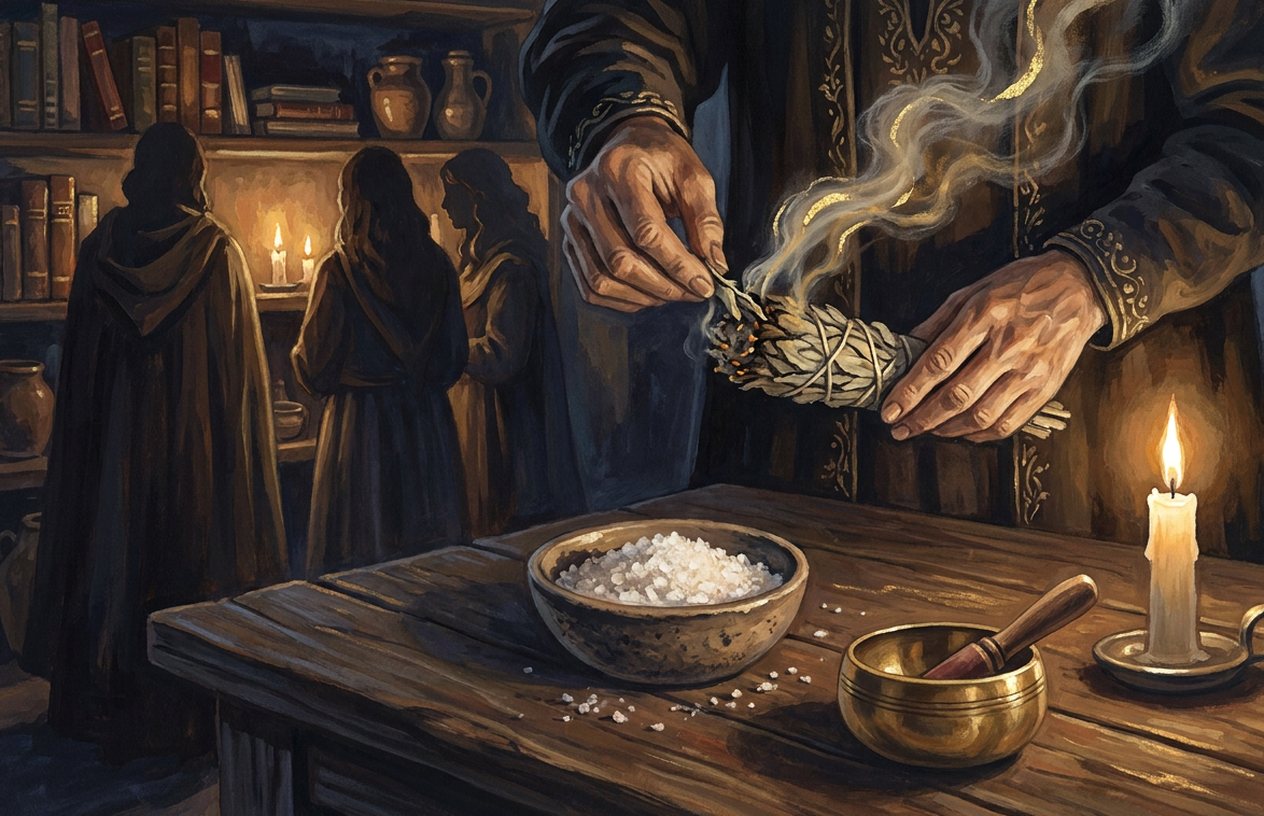
In many cultures people and rooms are smoked with dried plants. North American Indigenous traditions burn sage, sweetgrass or cedar; South America uses palo santo wood; Europe has juniper and wormwood. The smoke is slowly passed around the outline of the body from head to feet, with the inner request to release what is no longer needed.
Smoke, salt and sound: three of the oldest ways of cleansing the aura and the home.
Salt and water
In many traditions salt is considered a cleansing substance. A warm bath with a handful of sea salt, washing the hands in salted water, or simply a shower with the intention of rinsing off the day's tension are the simplest ways to cleanse the aura.
Sound
Singing bowls, bells, gongs and mantras are used so that sound vibration "shakes loose" stagnant energy. Practitioners ring a bowl around the body or simply listen to clear tones. You can find such tones in the solfeggio frequencies generator.
Visualising light
Sit quietly and imagine a white or golden light opening above your head. It flows down through the whole body and spreads around it until you are wrapped in a glowing, egg-shaped shell. Many schools practise this every morning as protection for the day.
Breath and meditation
Calm, deep breathing and attention to the body, teachers say, put the aura in order from within. A body scan meditation lets you move your attention through the whole body and notice where you feel tension or emptiness.
Aura photography today
Today you can have an "aura photo" taken at exhibitions, esoteric fairs and special studios. Such cameras usually do not work on the Kirlian principle: the person places their hands on sensors that measure skin conductance and temperature, and software turns the readings into colours around the picture. The first such cameras appeared in the late twentieth century and quickly became popular.
Aura readers treat these photos as a playful way to start a conversation about your energy rather than a final answer. They trust far more what a person feels and sees once they have learned to look for themselves.
Interestingly, photos taken one after another often show different colours. For aura readers this is not an error: in their view the aura changes with breath, thought and mood, so a photo captures only a moment. That is why some practitioners have their picture taken before and after meditation, to see how their state has shifted.
The aura, karma and the spiritual path
In many schools the aura is considered a visible sign of a person's inner path. The Theosophists wrote that the aura of a spiritually mature person is wide, bright and clear in colour, while that of someone who lives only by desire is darker and muddier. In this sense the aura is linked to karma: habits and intentions gradually change not only destiny but radiance.
Teachers of the spiritual path remind us that the aura is worth cleansing not because it is "damaged" but as everyday self-care, much like washing. What matters most is not the colour but whether a person feels alive, calm and open in their own body.
How the aura differs from related concepts
Concept
Essence
Link to the aura
Chakras
Energy centres along the spine
Each chakra feeds its own layer of the aura
Prana, qi
Life energy
What, according to the traditions, the aura is made of
Nimbus, halo
The radiance of holiness in art
The oldest depiction of the aura
Subtle body
The whole of the non-physical bodies
The aura is its visible or felt part
Energy field
A modern name for the aura
Most often used as a synonym for the aura
Frequently asked questions
What is an aura in simple terms?
According to the esoteric traditions, the aura is a field of light and energy around the body in which a person's thoughts, feelings, health and spiritual state are reflected. It is described as a coloured, ever-changing glow.
How can I see my aura?
Stand, or hold your hand, in front of a white wall in soft light, relax and look with a soft gaze slightly beyond the outline. After 30 to 60 seconds many people see a pale band around the fingers, and with daily practice colours gradually begin to appear.
What do aura colors mean?
In modern esotericism red is linked to vital strength, orange to creativity, yellow to intellect, green to healing energy, blue to calm and truth, violet to spirituality, and white and gold to protection and wisdom. Dark and muddy shades are read as stagnant energy.
How many layers does the aura have?
In the most popular modern model, developed by Barbara Brennan, the aura has seven layers, each linked to a chakra: from the etheric body next to the skin to the causal body linked to the crown chakra.
How do you cleanse your aura?
The traditions use smoke (sage, juniper, palo santo), salt and water, sound (singing bowls, bells, mantras), visualising light, time in nature, breathing and meditation.
Does an aura photo show your real aura?
Most modern aura cameras measure skin conductance and temperature, and software turns the data into colours. Aura readers treat such photos as a snapshot and a conversation starter rather than a final answer.
What is the difference between the aura and the chakras?
Chakras are energy centres along the spine, while the aura is the field around the body. According to the traditions, each chakra feeds its own layer of the aura, so they work together.
Go deeper
From the shop on this topic
Sources
Taittiriya Upanishad, chapter II (Brahmananda Valli)
K. von Reichenbach, Researches on Magnetism, Electricity, Heat, Light, Crystallization and Chemical Attraction in Their Relations to the Vital Force, 1850
A. Besant, C. W. Leadbeater, Thought-Forms, Theosophical Publishing Society, 1901
C. W. Leadbeater, Man Visible and Invisible, Theosophical Publishing Society, 1902
W. J. Kilner, The Human Atmosphere, or the Aura Made Visible by the Aid of Chemical Screens, 1911
S. D. Kirlian, V. Kh. Kirlian, “Photography and Visual Observation by Means of High-Frequency Currents”, Journal of Scientific and Applied Photography, 1961
B. A. Brennan, Hands of Light: A Guide to Healing Through the Human Energy Field, Bantam, 1987