Seasonal depression vs autumn blues: how to tell them apart
London loses almost 2 hours of daylight in October. How to tell autumn blues from seasonal affective disorder, what the evidence supports, and when to get help.
October 10 is World Mental Health Day. For 2026 the World Federation for Mental Health (WFMH) chose the theme “Lived Experiences Heard: Real Voices, Real Change”, a call to listen to people who have been through mental health problems themselves. Autumn brings a familiar story: getting up is harder, energy is lower and the sofa beats any plan.
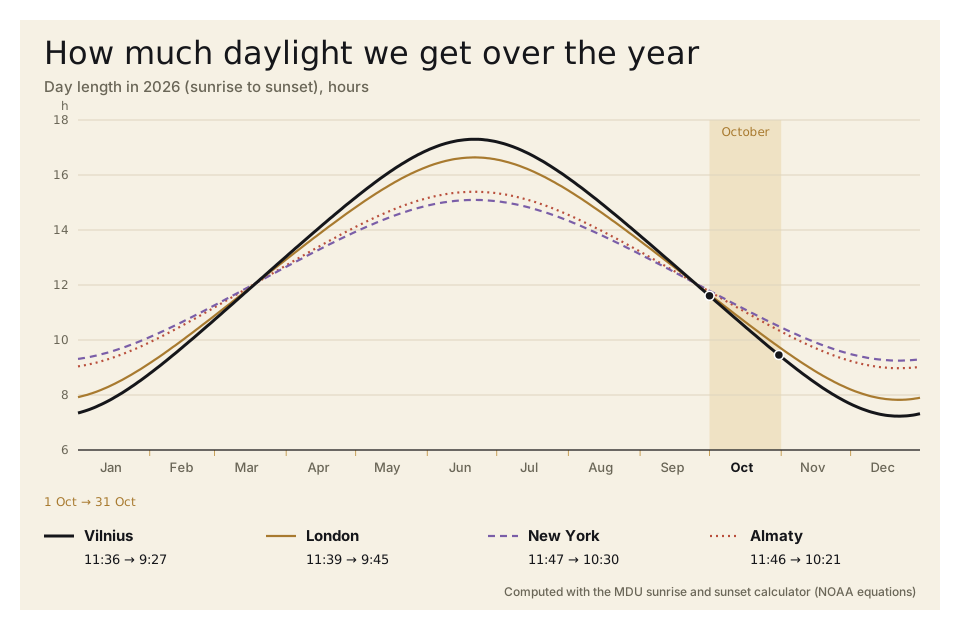
The physics behind it is simple. On October 1, 2026 London had 11 h 39 min of daylight; by October 31 it will have 9 h 45 min, almost two hours less in a single month. New York loses 1 h 17 min over the same weeks. When the UK turns its clocks back on October 25 and the US follows on November 1, sunset jumps to before five o’clock. For most people this means a passing dip, the autumn or winter blues. For some it is seasonal affective disorder (SAD), a recognised form of depression that responds to treatment. Here is how to tell them apart, what the research supports and when to get help.
In short
Autumn blues are mild and short-lived: your mood dips, but you keep working, seeing people and enjoying things you usually like.
Seasonal affective disorder is depression that returns at the same time of year for at least two years in a row and gets in the way of daily life.
The strongest evidence is for morning bright light therapy (10,000 lux), CBT adapted for SAD and antidepressants prescribed by a doctor. Outdoor daylight, exercise and a steady sleep schedule are useful additions.
If low mood lasts most days for more than two weeks, or you have thoughts of suicide, get help: 988 in the US, Samaritans on 116 123 in the UK and Ireland, 911 or 999 in an emergency.
Why mood drops in October: the daylight numbers
Seasonal mood changes follow the light, not the calendar. The US National Institute of Mental Health (NIMH) explains that shorter days may disturb the molecules that keep serotonin, a brain chemical involved in mood, at normal levels. People with winter-pattern SAD may also produce too much melatonin, the hormone that makes us sleepy. When daylight shrinks, the body clock can drift out of step with your schedule.
The further from the equator, the bigger the swing. We compared four cities at different latitudes: London, New York, Vilnius and Almaty. Day lengths were calculated with the MDU sunrise and sunset calculator, which uses the NOAA solar equations.
Date (2026)
London
New York
Vilnius
Almaty
June 21 (longest day)
16:38
15:06
17:18
15:23
September 23 (equinox)
12:11
12:09
12:12
12:09
October 1
11:39
11:47
11:36
11:46
October 31
9:45
10:30
9:27
10:21
November 30
8:14
9:31
7:43
9:16
December 21 (shortest day)
7:50
9:15
7:14
8:58
In October London loses 1 h 54 min of daylight, roughly four minutes a day, while New York loses 1 h 17 min. By the winter solstice London is down to 7 h 50 min, almost nine hours less than in June. The clock change makes evenings darker still: London sunset moves from 17:50 on October 24 to 16:48 on October 25, New York sunset from 17:55 on October 31 to 16:53 on November 1.
Day length in 2026 in four cities. In October London's day shrinks from 11:39 to 9:45 and Vilnius's from 11:36 to 9:27. Computed with the MDU sunrise and sunset calculator (NOAA equations).
Autumn blues, SAD and depression: what is the difference
The autumn and winter blues
NIMH notes that many people feel “down” when the days get shorter in fall and winter and feel better in spring when longer daylight hours return. The blues are unpleasant but mild. You may want more sleep and comfort food and find mornings harder, yet you keep working, keep in touch with friends and still enjoy the things you normally enjoy. Spring brings it back to normal.
Seasonal affective disorder
The American Psychiatric Association (APA) is clear that SAD is “more than just winter blues”. In the DSM-5-TR it is classified as major depressive disorder with seasonal pattern. According to the APA, about 5% of adults in the US experience SAD, it typically lasts about 40% of the year, and it usually starts between the ages of 18 and 30. Women and younger people are at higher risk, and SAD is more common further from the equator.
NIMH lists three conditions for a diagnosis: symptoms of depression; depressive episodes during a specific season for at least two consecutive years; and more frequent episodes in that season than at other times of year. Winter-pattern SAD typically adds oversleeping, overeating with carbohydrate cravings, weight gain and social withdrawal, the feeling of wanting to hibernate.
Depression without a seasonal pattern
Depression can begin in any season. If low mood, loss of interest and fatigue last more than two weeks and do not lift in spring, it is not a seasonal pattern. Either way, see a doctor: the APA notes that hypothyroidism, hypoglycaemia and viral infections can mimic SAD.
Sign
Autumn blues
Seasonal affective disorder
Depression
When
Some days in autumn and winter
Same season every year, at least 2 years in a row
Any time of year
How long
Days; lifts with a sunny weekend
About 4–5 months a year, eases in spring
Most days for at least 2 weeks, regardless of season
Mood and interest
Mood dips, enjoyment stays
Low most days, loss of interest in things you used to enjoy
Low, empty or hopeless mood
Sleep and appetite
More sleep, more comfort food
Oversleeping, carbohydrate cravings, weight gain
Sleep and appetite can go up or down
Daily life
You work and socialise as usual
Hard to function, withdrawing from people
Hard to work, study or keep in touch
What to do
Self-help: light, movement, routine
See a GP or doctor; light therapy, CBT, medication
See a GP, doctor or mental health professional
Based on NHS, NIMH and APA descriptions; this is an orientation aid, not a diagnostic tool.
How to tell what is happening to you
Start by noticing. For two weeks, note each evening how long you slept, how long you were outside in daylight and one word for your mood. A precise word (“sad”, “irritable”, “empty”) says more than “bad”. If you get stuck for words, try the emotion wheel. You will see whether low days come and go or have settled in.
What the evidence supports
Light therapy: 10,000 lux in the morning
Light therapy has been a mainstay treatment for winter-pattern SAD since the 1980s. NIMH describes the usual approach: sitting in front of a 10,000 lux light box for about 30 to 45 minutes a day, usually first thing in the morning, from autumn to spring. It is about 20 times brighter than indoor lighting and filters out UV. The APA says most people notice some improvement within one to two weeks.
A 2020 meta-analysis by Pjrek and colleagues in Psychotherapy and Psychosomatics pooled 19 randomised controlled trials. Bright light beat placebo (dim light or an inactive device), with a standardised mean difference of −0.37 for depression scores (18 studies, 610 patients) and a 1.42 times higher chance of responding to treatment. The authors call light therapy effective, but stress that the trials were small to medium-sized, used different methods and carried a moderate to high risk of bias. For that reason the NHS does not usually provide it, though it notes many people find it helps.
Check with a doctor first if you have an eye condition or take light-sensitising medicines. If you buy a lamp, the NHS advises one that is 10,000 lux, UV-free and carries a UKCA or CE mark.
Morning daylight outdoors
The APA notes that more sunlight helps some people with SAD, for example spending time outside or setting up your desk by a window. The NHS advises getting outside in daylight every day. In practice: a 20 to 30 minute walk within two or three hours of sunrise, even when it is overcast. In late October the sun rises around 06:50 in London and 07:25 in New York, so walking or cycling to work is an easy dose of light. You can check sunrise in your city on the sunrise and sunset page.
Exercise
A 2023 umbrella review in the British Journal of Sports Medicine covered 97 systematic reviews (1,039 trials, 128,119 participants). Compared with usual care, physical activity had medium-sized effects on depression (median effect size −0.43), anxiety (−0.42) and distress (−0.60). In autumn, move outdoors in daylight and get both.
A steady sleep schedule
For SAD the NHS recommends going to bed and getting up at the same time every day and not using phones or other devices right before bed. A fixed wake-up time is a strong signal for your body clock; sleeping until noon at the weekend knocks it off course. If your mind races at night, try slow breathing with the breathing timer or ten minutes with the meditation timer.
Vitamin D: an honest look
Vitamin D is often sold as the autumn mood vitamin, but the evidence is mixed at best. NIMH says many people with winter-pattern SAD are low in vitamin D, yet trials have produced conflicting results, some suggesting an effect similar to light therapy and others finding none. The largest trial, VITAL-DEP (JAMA, 2020), randomised 18,353 adults aged 50 and over to 2,000 IU of vitamin D3 a day or placebo for a median of 5.3 years. The risk of depression or clinically relevant depressive symptoms was the same in both groups, and mood scores did not differ. A small Danish trial in people with seasonal symptoms also found no benefit over placebo, though it was underpowered.
The honest summary: vitamin D is not a proven way to lift mood or prevent depression. In the UK, government advice repeated by the NHS is that everyone should consider a daily 10 microgram vitamin D supplement in autumn and winter, but that is for healthy bones, teeth and muscles, which is a separate question. If you suspect a deficiency, ask your doctor about a test and the right dose; NIMH notes that vitamin D can interact with some medicines.
CBT adapted for SAD
Cognitive behavioural therapy (CBT) helps you notice and change unhelpful thoughts and habits. The SAD version (CBT-SAD) usually runs as two group sessions a week for six weeks. It targets thoughts about winter and uses behavioural activation: scheduling enjoyable activities in advance.
In a University of Vermont trial, 177 adults with SAD were randomly assigned to six weeks of CBT-SAD or light therapy. Both worked equally well in the short term, with remission rates on the clinician-rated scale of 47.6% and 47.2%. Two winters later, depression had come back in 27.3% of the CBT-SAD group compared with 45.6% of the light therapy group, which the authors read as a sign that CBT-SAD lasts longer. In England you can self-refer to NHS Talking Therapies from 18 (16 in some areas); in the US, ask your doctor or use findtreatment.gov.
Medication
For moderate or severe depression a doctor may prescribe antidepressants, most often SSRIs; the FDA has approved extended-release bupropion to prevent seasonal episodes. Start or stop them only with medical advice.
Approach
What the sources show
Who it suits
Light therapy, 10,000 lux in the morning
Meta-analysis: better than placebo, but trials are small and mixed
Winter-pattern SAD, after checking with a doctor
CBT-SAD
As effective as light short-term, fewer relapses the second winter
SAD, especially if it returns every year
Antidepressants
Used for depression; extended-release bupropion approved in the US for prevention
Moderate to severe depression, prescribed only
Exercise
Medium effect on depression and anxiety symptoms
Everyone, as an add-on
Daylight and sleep routine
Self-help recommended by the NHS and APA
Everyone, especially the autumn blues
Vitamin D
Mixed trials; a large trial found no benefit for mood
Only for a confirmed deficiency, on medical advice
A two-week autumn plan
This plan is for the autumn blues and prevention. It does not treat depression, but builds the routine clinicians recommend.
Week 1: light and rhythm
Days 1–2. Choose a fixed wake-up time and keep it at the weekend too (no more than an hour later). Start a three-line diary: sleep, time outdoors, one word for your mood.
Days 3–4. Spend 20 to 30 minutes outside within two or three hours of sunrise every day. Move your desk closer to a window.
Day 5. Put three 30-minute exercise slots in your calendar for the week: a brisk walk, cycling, swimming or a class.
Days 6–7. Rate your life areas with the wheel of life and pick one to invest in this autumn.
Week 2: activity and connection
Days 8–9. Behavioural activation: list five things you enjoy (two of them outdoors) and schedule at least one every day.
Day 10. Meet or call someone you have not spoken to for a while.
Days 11–12. Evening wind-down: an hour without screens before bed, then five to ten minutes of breathing or meditation. The emotional intelligence test shows how you read and handle emotions.
Days 13–14. Review your diary. Was mood better on days with more light and movement? If low mood was there most days for two weeks, see a doctor.
If you are curious about Biomind products, the catalogue lists NoStress, a product for the topic of stress and tension. It is not a substitute for daylight, exercise, a sleep routine or professional help.
What to do in specific situations
You work 9 to 5 indoors and never see daylight. Walk part of the commute and eat lunch outside or by a window. The light is strongest around solar noon, which in late October falls at about 11:45 in London and 12:40 in New York.
The clocks have just gone back. Mornings are lighter now, so get outside early and move exercise to the morning or lunchtime.
It happens every autumn. If you already have a SAD diagnosis, NIMH notes that starting treatment before your usual onset may help. Plan it with your doctor in September, not December.
Someone close to you has withdrawn. Suggest something concrete to do together, such as a morning walk. If they talk about hopelessness or death, help them reach a crisis line.
What to avoid
Alcohol as an evening fix. The NHS advises people with SAD not to drink too much alcohol or use illegal drugs: they worsen sleep and mood.
Sleeping until noon at weekends. You lose the morning light and throw your body clock off.
Hibernating at home. The NHS and APA stress keeping up usual activities and contacts.
Starting light therapy on your own if you have an eye condition or bipolar disorder. Check with your doctor first: NIMH notes that SAD is more common in people with bipolar disorder, and the NHS warns about eye conditions and light-sensitising medicines.
High-dose vitamin D without a test. There is no proven mood benefit, and it can interact with medicines.
When to get help
See a GP, doctor or mental health professional if
low mood or lack of interest has lasted most days for more than two weeks;
it is hard to work, study or look after yourself and others;
the same state comes back at the same time every year;
two weeks of self-help have not made a difference;
you have thoughts of suicide or self-harm.
US: call or text 988 (Suicide and Crisis Lifeline, 24/7) or chat at 988lifeline.org; in a life-threatening situation call 911. UK and Ireland: Samaritans on 116 123, free, day or night; for urgent medical help call NHS 111, and in an emergency 999.
This year’s World Mental Health Day theme is a reminder: telling someone how you feel is a first step, not a weakness.
Frequently asked questions
Is seasonal depression a real condition?
Yes. The DSM-5-TR classifies it as major depressive disorder with seasonal pattern. A diagnosis requires depressive episodes in the same season for at least two consecutive years.
How do I know if it is the winter blues or SAD?
The blues are mild and short: you still work, socialise and enjoy things. SAD and other depression last most days for at least two weeks, take away interest and pleasure and get in the way of daily life.
Do SAD lamps work for mild autumn blues?
Trials were mostly in people with diagnosed SAD, where morning bright light beat placebo. For mild low mood, start with outdoor daylight and talk to a doctor before buying a lamp.
Should I take vitamin D for my mood?
The evidence does not show that vitamin D lifts mood or prevents depression; the VITAL-DEP trial with 18,353 people found no difference from placebo. Ask your doctor about testing and dose.
When do the clocks change this autumn?
In the UK and the rest of Europe on Sunday, October 25, 2026; in the US on Sunday, November 1, 2026.
Pjrek, E., et al. (2020). The Efficacy of Light Therapy in the Treatment of Seasonal Affective Disorder: A Meta-Analysis of Randomized Controlled Trials. Psychotherapy and Psychosomatics, 89(1). https://pubmed.ncbi.nlm.nih.gov/31574513/
Rohan, K. J., et al. (2015). Randomized Trial of Cognitive-Behavioral Therapy Versus Light Therapy for Seasonal Affective Disorder: Acute Outcomes. American Journal of Psychiatry, 172(9), 862–869. https://pubmed.ncbi.nlm.nih.gov/25859764/
Rohan, K. J., et al. (2016). Outcomes One and Two Winters Following Cognitive-Behavioral Therapy or Light Therapy for Seasonal Affective Disorder. American Journal of Psychiatry, 173(3), 244–251. https://pubmed.ncbi.nlm.nih.gov/26539881/
Okereke, O. I., et al. (2020). Effect of Long-term Vitamin D3 Supplementation vs Placebo on Risk of Depression or Clinically Relevant Depressive Symptoms and on Change in Mood Scores. JAMA, 324(5), 471–480. https://pubmed.ncbi.nlm.nih.gov/32749491/
Frandsen, T. B., et al. (2014). Vitamin D supplementation for treatment of seasonal affective symptoms in healthcare professionals: a double-blind randomised placebo-controlled trial. BMC Research Notes, 7, 528. https://pubmed.ncbi.nlm.nih.gov/25125215/
Singh, B., et al. (2023). Effectiveness of physical activity interventions for improving depression, anxiety and distress: an overview of systematic reviews. British Journal of Sports Medicine, 57(18), 1203–1209. https://pubmed.ncbi.nlm.nih.gov/36796860/
Mind University – lietuviška žinių platforma, vienijanti geriausius mentorius, tyrėjus ir praktikus asmeninio augimo, sveikatos, istorijos ir dvasingumo srityse. Kursai, knygos ir seminarai, padedantys gyvenimą pakeisti iš esmės.






Comments (0)
No comments yet. Be the first!
Only logged-in users can comment. Register — and you'll be able to share your thoughts on this article.
Register