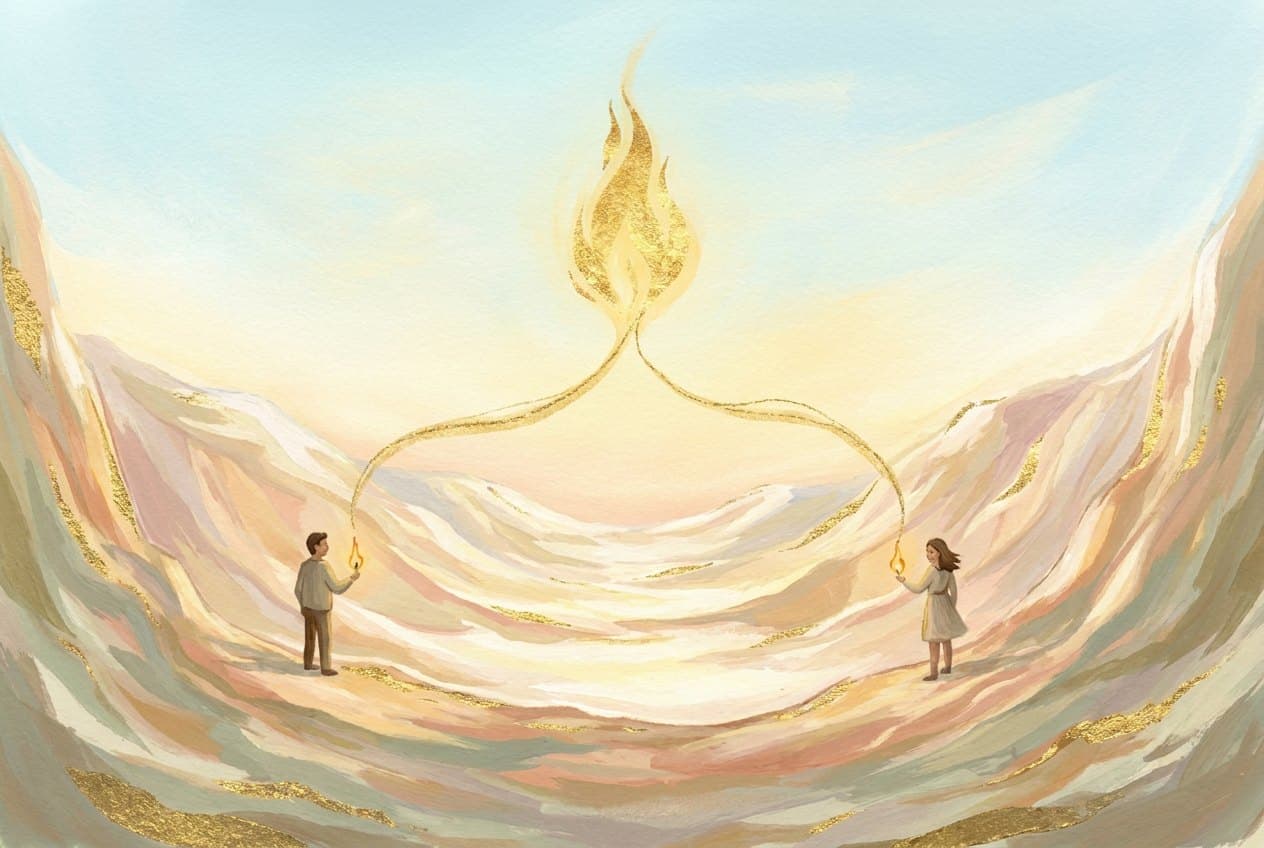
A twin flame is, in the spiritual traditions, the other half of the same soul: a soul is created whole, divided between two people and travels through lifetimes apart until the two halves meet again and recognise each other. The idea's roots reach back to Plato's Symposium and the Kabbalah, and it took its modern form in the Ascended Masters schools of the twentieth century.
Key facts
The oldest Western myth of a divided soul is Aristophanes' speech in Plato's Symposium (189c–193d): Zeus cut the round primordial humans in two, and ever since each half has sought the other.
The Babylonian Talmud (Sotah 2a) says that forty days before an embryo is formed, heaven proclaims who will be paired with whom; this is the source of the Yiddish word bashert, "destined".
The Zohar teaches that before birth a soul is a whole made of a male and a female part, which separate as it descends to earth.
Emanuel Swedenborg wrote in De amore conjugiali (1768) that partners who love each other are called not two angels in heaven, but one.
The term "twin flame" was popularised by Mark and Elizabeth Clare Prophet; her book Soul Mates and Twin Flames (1999) distinguished the twin flame, the soulmate and the karmic partner.
In esoteric practice 11:11 is considered the best-known sign of a twin flame meeting.
Contents
What is a twin flame?
A twin flame is the spiritual idea that a single soul was first created whole and then divided into two halves, which incarnate in two different people. Each half travels through its own lifetimes, gathers its own experience and, sooner or later, meets the other again in order to recognise it and complete a shared path. That is why a twin flame is described not as "the right partner" but as the other half of the same soul: a mirror in which a person sees both their light and their shadow.
The phrase "twin flame" became popular in the second half of the twentieth century through the Ascended Masters schools that grew out of Theosophy, and above all through the teaching of Mark and Elizabeth Clare Prophet. Yet the thought that a human being is half of something larger, and spends a lifetime longing for the missing part, is far older. We find it in Plato's Symposium, in the Kabbalah, in the Hindu image of Shiva and Shakti, in the Chinese legend of the red thread and in the alchemists' "sacred marriage".
Today the twin flame is spoken of on three levels. The first is the ancient myths of the divided human and of paired souls. The second is the twentieth-century esoteric teachers who described the idea as a system: how souls are created, why they separate and what happens when they meet. The third is modern practice: the twin flame stages, the signs, angel numbers and the work of union with oneself.
Plato's androgyne: the oldest myth of a split soul
The best-known Western story of a person searching for their other half is told in Plato's dialogue the Symposium (c. 385–370 BCE). At a banquet in Athens the guests take turns giving speeches in praise of Eros, the god of love, and the comic poet Aristophanes tells a myth that, more than two thousand years later, became the root of the twin flame idea.
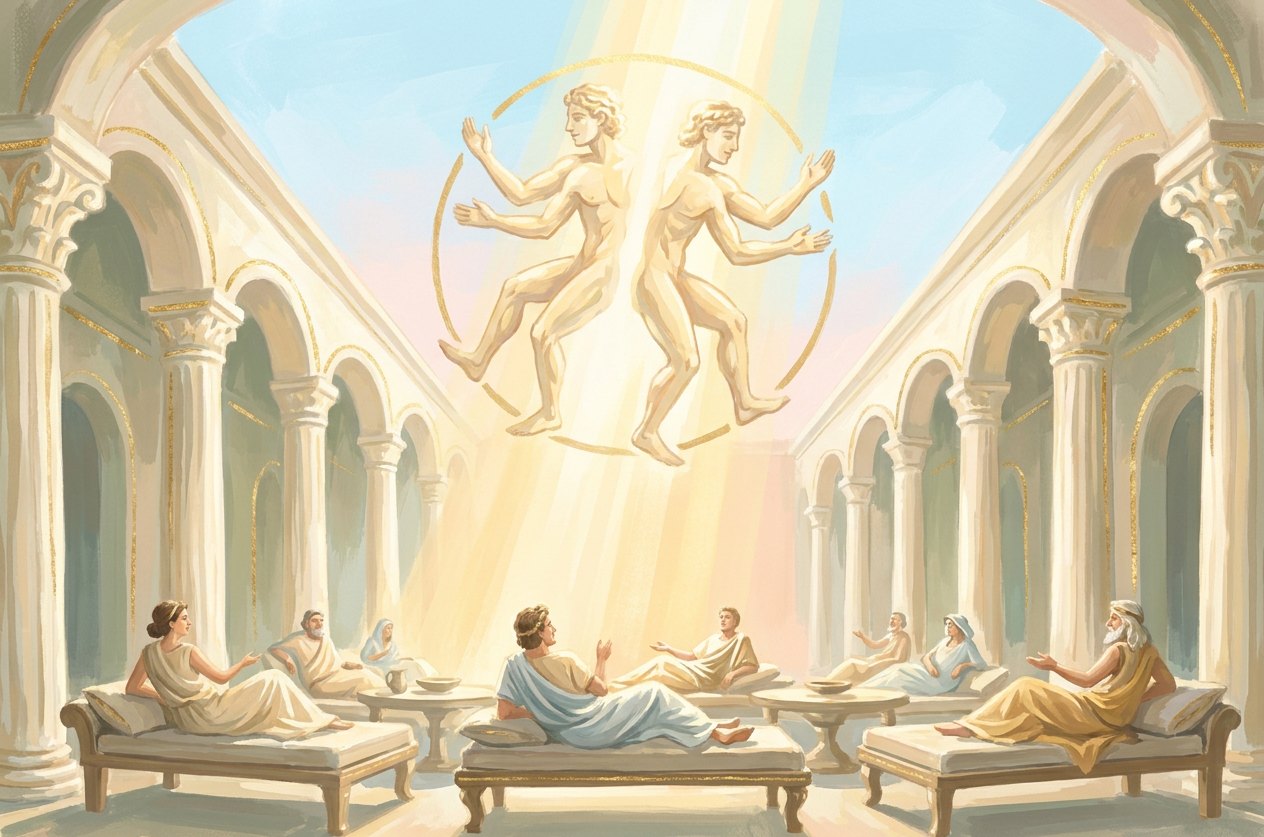
Aristophanes' myth in Plato's Symposium: the round primordial human whom Zeus cut in two.
A story from the tradition
Once, says Aristophanes, human beings were round: they had four arms, four legs and two faces looking in opposite directions. There were three sexes: the male, born of the Sun; the female, born of the Earth; and the androgynous, which joined both and was born of the Moon. These beings were so strong and so proud that they plotted to climb up to heaven and attack the gods. Zeus decided not to destroy them, but to cut each one in half, "as you might cut an egg with a hair". Apollo turned their faces towards the cut and drew the skin together at the navel. Ever since, each half longs for the other, and when the two meet they embrace and do not want to be parted. This desire and pursuit of the whole, says Aristophanes, is what we call love.
The myth matters because of several ideas that return in almost every later twin flame teaching. First, love here is not a new bond but a return to a lost wholeness. Second, the separation is not an accident but a consequence: humans were split because they forgot themselves and rose against the divine order. Third, the meeting is recognised at once. Aristophanes says that when people meet their own half they are "wonderfully struck with friendship, closeness and love" and cannot even explain what they want from one another, because the soul longs for something it cannot put into words.
Plato himself does not present the myth as the final truth: the speech is given by a comic poet, and Socrates later recounts Diotima's teaching that love leads from the beauty of one body to Beauty itself. Esoteric schools often read the two speeches together: the meeting of twin flames is not a goal in itself but a step towards a larger spiritual opening.
Paired souls in other traditions
The thought that two souls are meant for each other before birth appears in many cultures. Not all of them speak of one divided soul, but all agree that a true bond is not random; it is written somewhere higher.
Tradition
Image
What it means
Plato, Symposium
The round human cut in two
Love is the longing to regain a lost wholeness
Judaism and Kabbalah
Bashert, the destined one; the soul descends as a male and female whole
Marriage reunites two halves of one soul
Hinduism
Ardhanarishvara, Shiva whose left half is the goddess Parvati
Shiva and Shakti, consciousness and energy, cannot be separated
China and Japan
The red thread of fate, tied by the Old Man under the Moon
Those destined to meet are bound from birth
Alchemy
Coniunctio, the sacred marriage of king and queen
The union of opposites gives birth to a new, illumined being
Swedenborg
Married partners become one angel in heaven
True love continues after death
Ascended Masters
Twin flames born of one white fire body
Every soul has a single divine counterpart
Judaism and Kabbalah: bashert and the root of the soul
The Babylonian Talmud (tractate Sotah 2a) says that forty days before an embryo is formed, a heavenly voice proclaims: "The daughter of so-and-so is for so-and-so." From this comes the Yiddish word bashert, "destined", still used for the person meant for you from eternity. The Zohar, the central book of the Kabbalah, teaches that every soul before it comes into the world is a whole made of a male and a female part. As they descend to earth they separate and enter two different bodies, and later, if the two are worthy, the Holy One unites them again in marriage. The later Kabbalah of Isaac Luria added the idea of the "root of the soul" (shoresh neshamah): several souls can spring from the same root, which is why they feel a strange sense of recognition towards one another.
Hinduism: Shiva and Shakti
In Hindu iconography Ardhanarishvara is shown as a single figure whose right half is Shiva and whose left half is his consort Parvati. It is a cosmic rather than a romantic symbol: Shiva is pure consciousness and Shakti is creative energy, and neither can create without the other. In the Tantric schools the human path is the union of these two principles within oneself, so in this light the twin flame idea becomes not only a bond between two people but an inner union too.
China and Japan: the red thread
In a Chinese legend recorded in the Tang dynasty collection Xu Xuanguai lu by Li Fuyan, a young man named Wei Gu meets an old man reading a book by moonlight one night. This is Yue Lao, the Old Man under the Moon, who ties together with a red thread the ankles of those destined to marry. The thread may stretch or tangle, but it never breaks. In Japan the same image is called akai ito, the red thread of fate that ties together the little fingers.
Alchemy: the sacred marriage
Medieval and Renaissance alchemists pictured the Great Work as the marriage of king and queen, Sun and Moon. In the treatise Rosarium philosophorum, printed in Frankfurt in 1550, a series of woodcuts shows two opposites meeting, uniting, "dying" in a shared tomb and rising again as a single double being, the rebis. Esotericists often use this image to explain the twin flame path: the meeting is not a happy ending but the start of a transformation in which the old identity burns away.
Emanuel Swedenborg: one angel out of two
In his work De amore conjugiali (1768) the Swedish mystic Emanuel Swedenborg described what he said he had seen in the spiritual world: partners who truly love each other go on living together after death, and in heaven they are called not two angels but one. His teaching on eternal married love had a strong influence on nineteenth-century Spiritualism and on later soulmate ideas.
What the esoteric teachers taught about twin flames
The modern idea of the twin flame was shaped by twentieth-century esoteric schools. They took the old images and arranged them into one system: where souls come from, why they separate and where they are going.
Theosophy and the I AM movement
Theosophy, founded by Helena Blavatsky in the late nineteenth century, brought the ideas of reincarnation, karma and a hierarchy of spiritual masters to the West.
Out of it grew Guy Ballard's I AM Activity in the 1930s, which spoke of each person's divine Self and of the Ascended Masters.
Mark and Elizabeth Clare Prophet: the white fire body
Their school taught that God creates souls in pairs from a single "white fire body": one soul receives the masculine pole and the other the feminine.
In Soul Mates and Twin Flames (1999) E. C. Prophet distinguished three kinds of bond: the twin flame, the soulmate and the karmic partner. This division still underlies almost every modern description.
Edgar Cayce: soul groups
In his trance readings the American psychic spoke often of souls that travel together through many lifetimes and meet again to finish unfinished business.
His readings popularised the idea that the people closest to us often belong to the same soul group.
Rumi and Sufi poetry
In the verses of the Persian mystic Rumi, the lover and the beloved turn out in the end to be one, and the pain of separation is the road back to unity.
English versions of Rumi's poetry from the late twentieth century became one of the most quoted sources in twin flame writing.
The Ascended Masters school stressed one more thing that separates the twin flame from romantic love: the two flames share a common mission. They meet not only to be happy together, but to bring more light into the world together. According to these teachers, twin flames therefore do not have to become spouses. They may be friends, teacher and student, creative partners or meet only briefly. Sometimes one flame is not even incarnated at the time and helps the other from the spiritual world.
Twin flame, soulmate and karmic relationship
The three terms are often confused, although in esoteric schools they mean different things. The difference matters, because each bond has its own task and its own pitfalls.
Bond
Where it comes from
How it feels
Its task
Twin flame
The same soul divided in two
A mirror: intense, deep, sometimes painful
The awakening of both and a shared mission
Soulmate
The same soul group or root, many shared lifetimes
Calm, warm, easy, "like home"
Support and growing together
Karmic partner
Unfinished business from past lives
Strong attraction, often drama and repetition
Learn the lesson and untie the knot
According to the traditions, a person may meet several soulmates in a lifetime, and several karmic partners too, but only one twin flame. Elizabeth Clare Prophet wrote that a karmic bond is often a necessary stage before the twin flame meeting: until karma with others is resolved, the soul is not yet ready to recognise its other half. Read more about how karma works in the entry karma, and about the wheel of lives in samsara.
The eight twin flame stages
In modern esoteric writing the twin flame path is usually described in stages. Different schools count anywhere from five to twelve, but eight are mentioned most often. The stages do not always run in a straight line: some repeat, some last for years and some pass in a few days.
Yearning. Even before the meeting a person feels that somewhere there is someone who is "theirs". Earlier relationships seem unfinished, as if something were missing that cannot be named.
Meeting and recognition. The first look feels less like meeting and more like remembering. Many people describe déjà vu, time standing still or the sense of having known the other all their life.
Honeymoon. A time when everything matches: thoughts, laughter, dreams, synchronicities. It seems that what was sought has finally been found.
Testing. The mirror begins to show the shadow. Old wounds, fears and family patterns rise to the surface, because the other half reflects them with great precision.
Crisis. The tension peaks. A break often follows: a quarrel, distance, outside obstacles or the other person's withdrawal.
Runner and chaser. One runs from the intensity, the other chases. This is the best-known and hardest stage, which, the teachers say, ends only when the chaser stops and turns towards themselves.
Surrender. The person lets go of control and expectations, returns to their own path and begins to heal what the mirror revealed. The traditions call this union with oneself.
Union. The two flames meet again, but now from fullness rather than lack. The bond becomes calmer and attention turns to the shared mission.
Most teachers stress that the eighth stage is not a promise that two people will be together in physical life. Union happens first at the level of the soul, and its outward form can vary greatly.
Runner and chaser: why twin flames separate
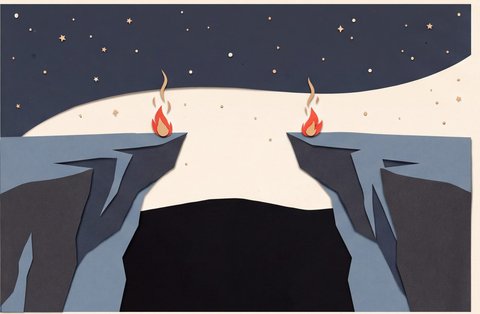
More is written about this stage than any other, because it hurts the most. According to the traditions, the twin flame bond is so strong that it brings up everything still unhealed in both halves. One person, usually the one less spiritually prepared, is frightened by this light and runs: cuts contact, shuts down, moves away or throws themselves into other relationships. The other feels abandoned and starts to chase.
Esoteric teachers explain this stage as a school of the soul. The runner must learn not to fear their own depth, and the chaser must learn to find fullness within rather than in the other. While the chaser chases, the wheel keeps turning. When they stop, let go and begin to live their own life, the energy, the teachers say, shifts, and both can move on. That is why most twin flame practices are not about how to get the other back, but about how to come back to yourself.
Example
Anna met Mark on a work trip and by the end of the first evening felt as though she were talking to someone she had known for years. After a few months of closeness Mark suddenly went quiet and moved to another city for work. For half a year Anna checked his profiles, looked for signs and wrote him long messages. The turning point came when she stopped waiting, went back to the painting she had abandoned and left for a meditation retreat. She later told herself that only then did she first feel that her life belonged to her. Whether Mark would come back mattered less to her than what she had found in that time.
Twin flame signs
These are the signs mentioned most often in esoteric schools and modern writing. None of them proves anything on its own, but when there are many and they keep repeating, practitioners read them as a spiritual signal.
Recognition at first sight. The feeling that you already know someone you are seeing for the first time, often together with déjà vu.
The mirror. The other person reflects your strengths and your wounds. Their behaviour lands exactly where it hurts the most.
A similar or complementary story. Similar childhood experiences, the same turns of fate, sometimes even the same dates.
Synchronicities. Messages written at the same moment, the same dreams, unexpected meetings in unlikely places.
Repeating numbers. Especially 11:11, 1111, 222 and 717, which numerology links to unity and the meeting of souls.
A telepathic bond. You sense the other's mood at a distance, know when they will call, or think of them at the very moment they think of you.
Intensity. The bond does not let you stay indifferent: it is either very bright or very painful.
Spiritual awakening. After the meeting change begins: values, work and circle of friends shift, and a wish to go deeper into spiritual practice appears.
A sense of shared mission. It feels as if together you have something to do for the world, not just to be together.
The traditions also warn that strong attraction and drama do not by themselves mean a twin flame. Far more often this is a karmic bond that has come to teach a lesson. The main difference, the teachers say, is what remains after the storm: a twin flame leads to growth and freedom, while the karmic wheel leads to the same pain again and again.
11:11 and angel numbers on the twin flame path
Perhaps the best-known twin flame sign is 11:11. In numerology 11 is a master number, and the two pairs of ones look like two pillars, two people standing side by side, or a gateway. That is why esotericists call 11:11 the number of soul meetings and "the opening of the gate". Many practitioners say they began to see 11:11 often just before a meeting, or at a time when the bond was changing.
Other numbers often mentioned in connection with twin flames:
1111: unity, a new beginning, the recognition of souls.
222: balance, partnership, trust that everything is falling into place in its own time.
333: support from teachers and angels during a hard stage.
777: spiritual growth and being on the right path.
888: the completion of a karmic cycle and abundance after trials.
You will find the meanings of all the numbers in the angel numbers entry. What matters most, numerologists teach, is not the number itself but what you were thinking or feeling at the moment you saw it.
Twin flames and the destiny matrix
The destiny matrix breaks a date of birth down into a system of 22 arcana and shows which energies a person brought into this life. For relationships a few zones matter most: the love line, which shows what kind of partner the soul is looking for and which lessons it receives through love; the karmic tail, which shows what was carried over from past lives; and the ancestral lines passed down through the father's and mother's sides.
Matrix readers usually explore the twin flame question with a couple compatibility reading. In it two dates of birth are combined into a shared couple matrix, showing where two people complete each other, where their energies coincide and where a shared task lies hidden. Practitioners say that twin flame matrices often contain mirrored arcana, or the same energies in different positions, while the centre of the shared couple matrix shows the mission they are meant to carry out together.
Start with your own matrix: read your love line and your karmic tail. They often show why the same kind of person keeps attracting you and which lesson the soul wants to finish before it meets its other half.
Practices on the twin flame path
Almost every school agrees on one thing: twin flame work is first of all work on yourself. The more a person unites within, the freer the bond with the other becomes. These are the practices mentioned most often.
Union with yourself
In the light of Tantra and alchemy, every person holds both a masculine and a feminine principle: the energies of action and receiving, Sun and Moon, Shiva and Shakti. The practice of inner union is to strengthen consciously the side that is lacking. If you always rush and control, learn to receive and to wait. If you always wait, learn to act and to ask. According to the teachers, once the inner opposites are reconciled, the outer bond grows calmer too.
Heart meditation and loving-kindness
The Buddhist practice of metta sends good wishes to yourself, to loved ones, to strangers and to those with whom the bond is difficult. On the twin flame path it is especially valued in the runner and chaser stage: instead of chasing, you send the other peace and freedom each day, and yourself fullness.
The two-candle ritual
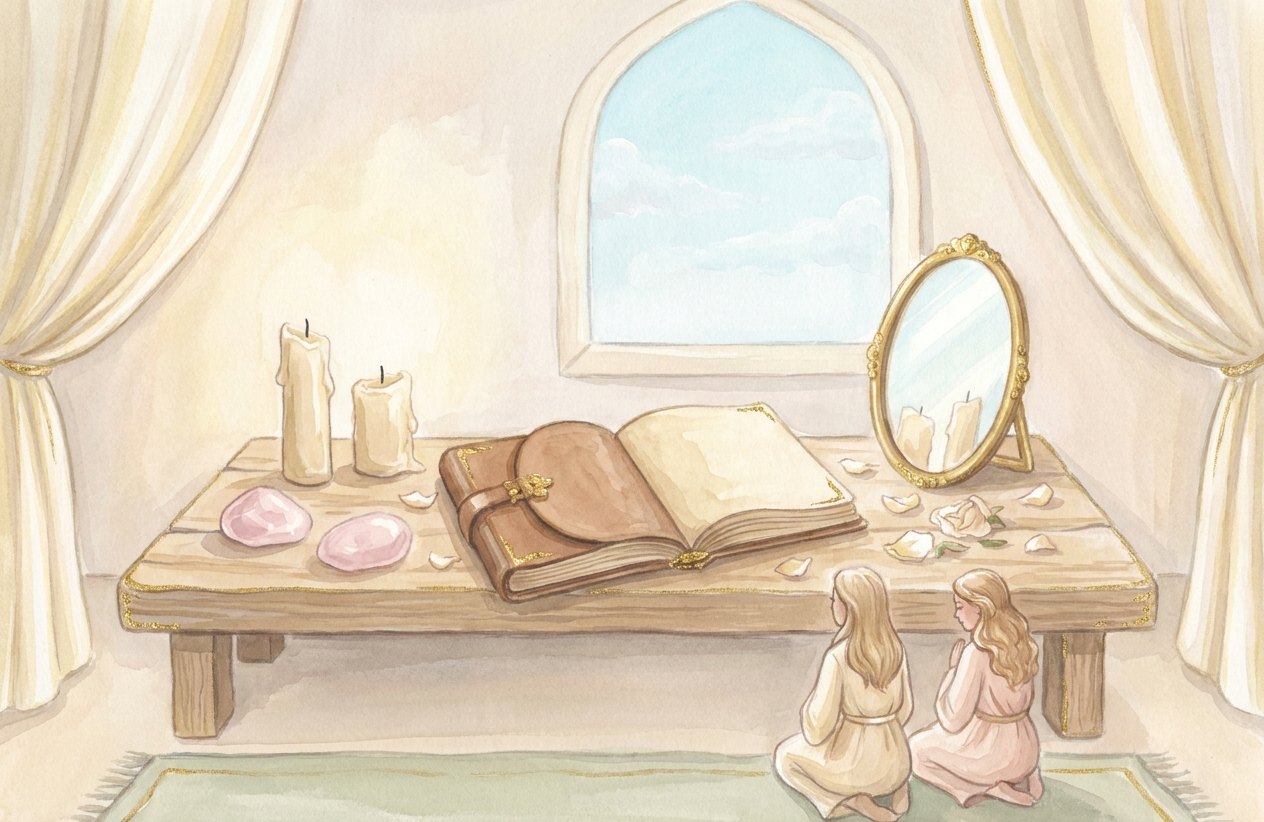
A popular modern practice is done at the new or full moon. Two candles are lit on a table: one stands for you, the other for your other half, whether or not you have met them yet. For a few minutes you gaze calmly at the flames, as taught in the candle meditation trataka, and quietly speak an intention: not "I want them to come back", but "I am ready for a bond that leads to freedom and light". The candles are left to burn down or are snuffed out with the fingers rather than blown out.
The two-candle ritual at the new moon is one of the most popular modern twin flame practices.
A synchronicity journal
Write down every sign: a number, a dream, an unexpected meeting, a song that played at the right moment. Next to it, note what you were feeling and thinking at the time. After a few weeks a pattern often emerges that says more than any single sign.
A letter you will not send
Write a letter to your twin flame: everything you would like to say, uncensored. Then read it aloud and burn or bury it. Many schools use this practice in the runner and chaser stage, when words can no longer reach the other but still need to leave you.
Crystals and roses
In esoteric practice the stones most often suggested for the twin flame bond are rose quartz, linked to the heart chakra; moonstone, linked to the feminine principle and to cycles; and rhodonite, seen as a stone for emotional wounds. They are kept under the pillow, worn around the neck or placed on the heart during meditation.
What a twin flame does not mean in the traditions
The twin flame idea is beautiful, but like every powerful concept it can be misunderstood. Esoteric teachers often recall a few boundaries.
Not an excuse for pain. No tradition teaches you to stay where you are humiliated or harmed because "this is my twin flame". A true soul bond leads to freedom, not to bondage.
Not a reason to break other relationships. E. C. Prophet wrote that meeting a twin flame does not cancel the duties taken on in this life, and that karma with others must be respected.
Not a promise that the person will return. Union happens at the level of the soul, and the physical bond may be short or may not happen at all.
Not the only road to wholeness. According to the traditions, a person is already whole. A twin flame only helps them remember it.
When to seek help
If you stay in a relationship where you are humiliated, controlled or harmed because of a "twin flame", or the longing becomes so strong that you can no longer sleep, eat or work, talk to someone you trust or contact a crisis line. In the US and Canada you can call or text 988; in the UK and Ireland, Samaritans are on 116 123. If a life is in danger, call your local emergency number.
How does a twin flame differ from similar ideas?
Concept
Essence
Link to the twin flame
Soulmate
A close soul from the same group
A calmer bond; there may be several in a lifetime
Karmic partner
A bond for settling unfinished business
Often comes before the twin flame and prepares the soul
Bashert
The destined partner in Judaism
An old counterpart of the idea that a couple is made in heaven
Self-knowledge guide Ema Sakalauskaitė writes about why a twin flame bond feels so intense, how to recognise the cycle of rejection and return, and how not to lose yourself inside it.
Frequently asked questions
What is a twin flame in simple terms?
According to the spiritual traditions, a twin flame is the other half of the same soul. One soul is divided between two people who travel apart, and when they meet they feel a deep recognition, as if they had known each other all their lives.
What is the difference between a twin flame and a soulmate?
A soulmate is a close soul from the same soul group; the bond is calm and warm, and you may meet several in a lifetime. There is only one twin flame. It is the same soul, so the bond works like a mirror: very intense and often painfully transformative.
What are the twin flame stages?
Eight are mentioned most often: yearning, meeting and recognition, honeymoon, testing, crisis, runner and chaser, surrender and union. The stages do not always come in order, and some repeat.
How do I recognise my twin flame?
The traditions name these signs: recognition at first sight, déjà vu, a mirror feeling, synchronicities, repeating numbers such as 11:11, a telepathic bond, the intensity of the connection and a spiritual awakening that begins after the meeting.
What does 11:11 mean for twin flames?
In esoteric practice 11:11 is considered the number of soul meetings and of a gateway opening. In numerology 11 is a master number, and the two pairs of ones look like two people standing side by side.
Do twin flames always end up together?
No. According to the teachers, union happens first at the level of the soul. In physical life twin flames may be partners, friends, teacher and student, or meet only briefly.
How can I check compatibility with a twin flame?
Destiny matrix readers combine both people's dates of birth into a shared couple matrix and look at where the energies complete or mirror each other and which shared task the centre of the couple matrix shows.
Sources
Plato, Symposium, 189c–193d (speech of Aristophanes)
Babylonian Talmud, tractate Sotah, 2a
Zohar, I, 85b
Li Fuyan, Xu Xuanguai lu (the story "Dinghun dian"), 9th century
Rosarium philosophorum, Frankfurt, 1550
E. Swedenborg, De amore conjugiali, Amsterdam, 1768
E. C. Prophet, Soul Mates and Twin Flames: The Spiritual Dimension of Love and Relationships, Summit University Press, 1999